
|
Quantity
|
Total
|
||
|
|
|||
|
|
|||
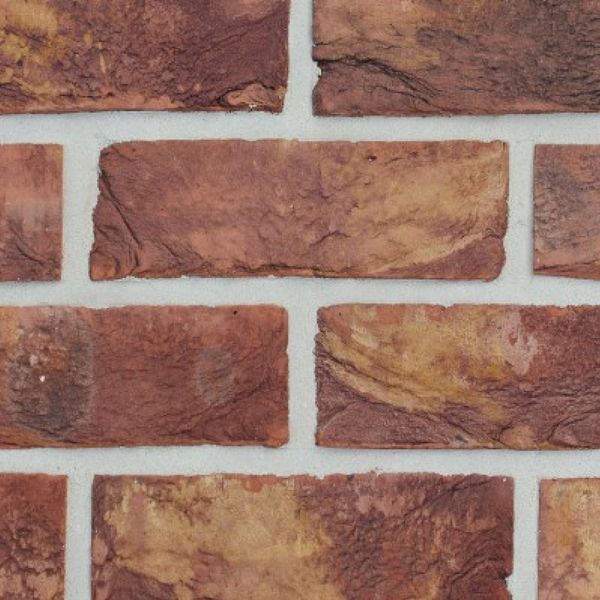
Facade thermopanel Primeberg Katerynoslav Autumn Leaves
Facade with a natural palette and the warmth of autumn. The thermopanel combines insulation EPS-100 and hand-formed tile Katerynoslav in the shade Autumn Leaves with a relief texture. The combination of rich red-brick and golden-brown transitions creates a lively play of colors reminiscent of the autumn tree crown. Such a facade looks authentic and expressive, adds coziness and prestige to the building, creating a unique character. An ideal choice for private houses and commercial objects where original style in combination with durability and energy efficiency is valued.
For which types of premises it is suitable
- Private houses and cottages — elegant appearance and insulation.
- Summer houses and suburban houses — comfort at any time of the year.
- Multi-apartment buildings — reduction of heating costs and modern appearance.
- Commercial objects (shops, offices, restaurants) — attractive facade and savings on коммунal services.
- Industrial buildings — effective insulation and aesthetics.
Why is it worth purchasing thermopanels from Primeberg?
- Modern production with quality control.
- 20-year warranty.
- Light and fast installation.
- Insulation and decor in one material.
- Preservation of heat in winter and coolness in summer.
Technical characteristics
| Parameter | Value |
|---|---|
| Tile color | Red\Brown |
| Texture | Relief |
| Tile type | Hand-formed |
| Tile manufacturer | Katerynoslav |
| Panel size (W×L) | 1040×560 mm |
| Thermal conductivity (λ) | 0.037 W/m·K |
| Foam class | EPS-100 (Density - 18 kg/m³) |
| Water absorption | 2–4% |
| Weight | from 5 to 15 kg (depending on thickness) |
| Area of one panel | 0.582 m² |
| Quantity per 1 m² | 2 pcs. |
Foam thicknesses: which one to choose?
Do you not know which thickness to choose? Here is a short hint according to the type of building and climate. If you are in doubt — we will suggest the optimal option specifically for your object.
| Thickness | Recommendation |
|---|---|
| 50 mm | Minimal additional insulation for already insulated houses or facades where there is no possibility to increase the thickness. Gives a small effect and is used rather as a corrective or decorative solution and not as full-fledged insulation. |
| 80 mm | Initial level of thermal insulation for relatively warm walls or regions with a mild climate. In Europe it is used for reconstructions but does not meet modern energy efficiency requirements for new housing. |
| 100 mm | Basic option for small buildings, summer houses or houses with seasonal residence. Provides noticeable reduction of heat losses but in colder regions of Europe is already considered minimally acceptable. |
| 120 mm | The most balanced solution for most suburban residential buildings in a moderate and cold climate. Provides a comfortable microclimate and real savings on heating without excessive material costs. |
| 150 mm | Meets the standards for thermal insulation of multi-apartment residential buildings. A quality solution for energy-efficient and suburban houses with permanent residence. Allows to significantly reduce heating costs and approach the standards of low-energy or passive house. |
| 200 mm | Maximum insulation level for northern regions or houses with almost zero energy consumption (NZEB). Used where the priority is minimal heat losses and not savings at the start and meets European standards for thermal insulation of multi-apartment residential buildings. |
The thicker the foam — the better the thermal insulation. We will help you choose the optimal thickness for your house.
Recommendations for installation and storage
Installation:
- Surface preparation: Before installation the facade must be clean, dry and even. If necessary remove all irregularities and defects.
- Marking: Carefully mark the location of the panels starting from the lower row.
- Fixing: Panels are fixed to the wall with special dowels and polyurethane foam-adhesive. It is important to follow the manufacturer’s recommendations regarding the quantity and placement of fixings.
- Grouting: After installation of the panels the seams between the tiles must be grouted with a special grout which will provide additional sealing and an aesthetic appearance.
Storage:
- Store thermopanels in a dry, ventilated room protected from direct sunlight and moisture.
- Panels must be stored in a horizontal position on a flat surface to avoid deformation.
Do you want a beautiful and warm facade?
We will select the thickness, color and configuration for your house, make a 3D preliminary preview and an accurate calculation.
Leave a request on the website or call: +380 (66) 373 13 31