
|
Quantity
|
Total
|
||
|
|
|||
|
|
|||
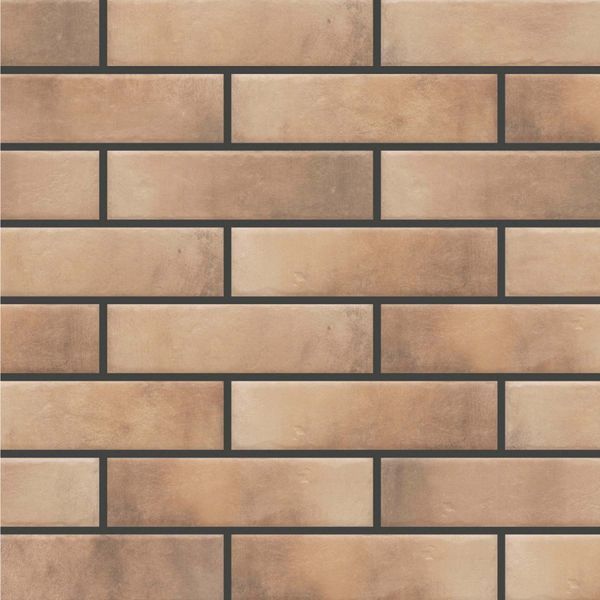
Facade Thermal Panel Primeberg Retro Brick Masala
Retro Brick Masala — a warm and vibrant shade for the facade.
The thermal panel combines EPS-100 insulation and Cerrad clinker tiles in the Masala color with a matte surface. The combination of beige and brown tones adds coziness and natural character to the building, creating a feeling of comfort.
This shade is perfectly suited for private houses and cottages and harmoniously combines with wood elements and dark-colored roofs.
Suitable for the following types of buildings
- Private houses and cottages — elegant appearance and thermal insulation.
- Summer houses and country homes — comfort throughout the year.
- Multi-apartment buildings — reduced heating costs and a modern exterior appearance.
- Commercial facilities (shops, offices, restaurants) — attractive facade and savings on utility costs.
- Industrial buildings — effective insulation and aesthetic appearance.
Why choose Primeberg thermal panels?
- Modern production with quality control.
- 20-year warranty.
- Easy and fast installation.
- Insulation and decorative finishing in one material.
- Heat retention in winter and coolness preservation in summer.
Technical specifications
| Parameter | Value |
|---|---|
| Tile color | Beige / Brown |
| Texture | Matte |
| Tile type | Clinker gres |
| Tile manufacturer | Cerrad |
| Panel size (W × L) | 1040 × 560 mm |
| Thermal conductivity (λ) | 0.037 W/m·K |
| Polystyrene class | EPS-100 (Density — 18 kg/m³) |
| Water absorption | 2–4% |
| Weight | from 5 to 15 kg (depending on thickness) |
| Area of one panel | 0.582 m² |
| Quantity per 1 m² | 2 pcs |
Polystyrene thickness: which one to choose?
Not sure which thickness to choose? Below is a brief recommendation depending on the building type and climate conditions. If you are unsure, we will help you select the optimal solution specifically for your project.
| Thickness | Recommendation |
|---|---|
| 50 mm | Minimal additional insulation for already insulated buildings or facades where increasing thickness is not possible. Provides a small effect and is mainly used as a corrective or decorative solution rather than full thermal insulation. |
| 80 mm | Initial level of thermal insulation for relatively warm walls or regions with a mild climate. Used in Europe for renovations but does not meet modern energy efficiency requirements for new residential construction. |
| 100 mm | Basic option for small buildings, summer houses, or seasonally used homes. Provides noticeable reduction of heat loss but is already considered the minimum acceptable level in colder European regions. |
| 120 mm | The most balanced solution for most residential houses in moderate and cold climates. Ensures a comfortable indoor microclimate and real savings on heating costs without excessive material consumption. |
| 150 mm | Complies with Ukrainian building standards for thermal insulation of multi-apartment residential buildings. A high-quality solution for energy-efficient houses intended for permanent living. Significantly reduces heating costs and allows approaching low-energy or passive house standards. |
| 200 mm | Maximum insulation level for northern regions or buildings with nearly zero energy consumption (NZEB). Used where minimizing heat loss is a priority and complies with European thermal insulation standards for residential buildings. |
The thicker the polystyrene layer, the better the thermal insulation. We will help you select the optimal thickness for your home.
Installation and storage recommendations
Installation:
- Surface preparation: Before installation, the facade must be clean, dry, and even. Remove all irregularities and defects if necessary.
- Marking: Carefully mark the panel placement starting from the bottom row.
- Fixing: Panels are fixed to the wall using special facade anchors and polyurethane adhesive foam. It is important to follow the manufacturer’s recommendations regarding the number and placement of fasteners.
- Joint grouting: After installation, joints between tiles must be filled with a special grout to ensure additional sealing and an aesthetic appearance.
Storage:
- Store thermal panels in a dry, ventilated area protected from direct sunlight and moisture.
- Panels should be stored horizontally on a flat surface to prevent deformation.
Want a beautiful and warm facade?
We will select the thickness, color, and configuration for your building, prepare a 3D preview, and provide an accurate material calculation.
Leave a request on the website or call: +380 (66) 373 13 31